| www.tmatlantic.com
Test & Soldering Equipment On-line Store |
|
D.E.V.I.C.E. (Wiki)Calculators Services |
|||||



Filter by first letter
|
Current Divider Calculator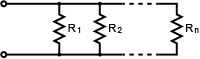
Current divider calculator is an easy-to-use online engineering tool to help you estimate the current flowing through each resistor of up to ten resistors connected in parallel. According to Ohm's law, in a parallel resistive circuit, the current flowing through a path is: Ii = V / Ri, where:
Ii – the current flowing through a path (resistor); In a parallel circuit, the voltage (V) remains the same across all resistors and is equal to the product of the source current (I) and the circuit's total resistance (Rtotal): V = I × Rtotal. The total resistance (Rtotal) of the parallel circuit is: 1 / Rtotal = 1 / R1 + 1 / R2 + … + 1 / Rn Frequently Asked QuestionsWhat Is the current divider calculator used for?The Current Divider Calculator is an online engineering tool designed to calculate how electric current is distributed among parallel branches of a circuit. It is based on Ohm's Law and the Current Divider Rule, allowing users to quickly determine the current flowing through each resistor in a parallel network. This calculator is especially useful when working with circuits where:
Typical Use Cases
Key principle: the branch with lower resistance carries higher current. Practical ExamplesExample 1 – For StudentsA student analyzes a parallel circuit with three resistors:
Total current: 1 A. Just enter the resistor values and total current, and instantly see how current splits among the branches. Result: the smallest resistance carries the largest portion of the current — a perfect confirmation of theory learned in class. Example 2 – For DIY & Home ProjectsA hobbyist builds an LED circuit with several parallel branches, each protected by its own resistor. The task is to ensure that each LED receives a safe current level and avoid overheating. The Current Divider Calculator shows the current through each branch, helping select proper resistor values and prevent LED damage. Example 3 – For EngineersAn engineer designs a measurement circuit where several sensors are connected in parallel to a controlled current source. The task is to guarantee precise current distribution and analyze the effect of resistor tolerance changes. The tool allows fast "what-if" simulations without manual recalculation, improving design accuracy and development speed. How does a current divider calculator work? It applies the current divider rule to distribute the total current among parallel resistive branches based on their resistance values.
What is the current divider rule? The current divider rule states that in a parallel circuit, current divides inversely proportional to resistance — lower resistance branches carry more current.
When should I use a current divider instead of a voltage divider? Use a current divider when analyzing parallel circuits with a known current source. Voltage dividers are used for series circuits with a known voltage source.
|
Units Converter
|








|