| www.tmatlantic.com
Test & Soldering Equipment On-line Store |
|
D.E.V.I.C.E. (Wiki)Calculators Services |
|||||



Filter by first letter
|
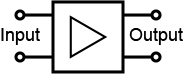
dB Gain CalculatorIn electronic systems and signal processing, expressing gain or loss linearly can result in unwieldy numbers. To simplify analysis across cascaded amplifier stages or transmission lines, engineers utilize the decibel (dB) — a logarithmic unit of ratio. This interactive dB Gain Calculator instantly computes the decibel change between input and output signals for power, voltage, or current. Whether you are measuring the amplification of an RF power amplifier, tracking signal attenuation across a long coaxial cable, or configuring the mixing console levels in an audio engineering matrix, automated decibel calculation ensures flawless mathematical precision.
The Logarithmic Formulas: Power vs. Voltage or CurrentThis tool allows you to calculate voltage gain in dB, current gain in dB and power gain in dB. Because power is proportional to the square of voltage (P = V² / R), calculating decibels requires different multiplier constants depending on the electrical property being measured. To find voltage gain this calculator uses the following equation: dB = 20lg(Vout / Vin), where: dB – decibel gain in dB, Vin – input voltage, Vout – output voltage. The same equation can be used to calculate current gain. To find power gain this calculator uses the following equation: dB = 10lg(Pout / Pin), where: dB – decibel gain in dB, Pin – input power, Pout – output power. Decibel Sign Conventions: a positive dB result indicates amplification (gain), meaning the output signal is stronger than the input. A negative dB result indicates attenuation (loss), which is common when analyzing passive components like filters, pads, or cables. High-Frequency Reference Milestones
Frequently Asked QuestionsWhat is the difference between 10 lg and 20 lg in dB calculations? The factor of 10 is used strictly for power quantities (Watts), while the factor of 20 is used for root-power quantities such as voltage (Volts) or current (Amps). Because electrical power scales with the square of the voltage (P ∞ V²), the exponent of 2 is moved to the front of the logarithm function according to standard mathematical rules (10 × 2 = 20). Using 10lg for a voltage ratio will yield a major calculation error.
What does a -3 dB change mean for power vs. voltage? The -3 dB mark is a universal milestone in electronics. For power calculations, -3 dB means that the output power has dropped to exactly 50% (half) of the input power. For voltage calculations, -3 dB means the output voltage has dropped to 70.7% (1 / √2) of its original level. This threshold is widely used to define the cutoff frequency boundaries in low-pass and high-pass filters.
Why do engineers add decibels together instead of multiplying them? The primary advantage of the decibel's logarithmic scale is that it converts complex multiplication into simple addition. If an RF signal passes through an antenna preamplifier with a gain of +15 dB, a coaxial cable with a loss of -3 dB, and a bandpass filter with a loss of -2 dB, you simply add the values: +15 - 3 - 2 = +10 dB. This represents a net tenfold increase in power, making system-level signal path tracking incredibly fast.
What is the difference between dB, dBm, and dBV? dB is a pure, dimensionless ratio used to compare two arbitrary signal levels (like output vs. input). It tells you how much a signal changed, but not its absolute strength. Conversely, dBm and dBV are absolute units locked to a fixed reference point: dBm measures power relative to exactly 1 milliwatt (1 mW), while dBV measures voltage relative to exactly 1 Volt (1 V).
Can this calculator process negative dB values for system attenuation? Yes. If the input voltage or power is greater than the output voltage or power (which happens inside passive components, attenuator pads, or long-distance transmission cables), the fraction inside the logarithm becomes less than 1. This naturally generates a negative decibel result. A calculation yielding -20 dB of voltage gain means your output signal has been successfully attenuated down to exactly 10% of its initial input value.
|
Measurement History Events
Units Converter
|








|