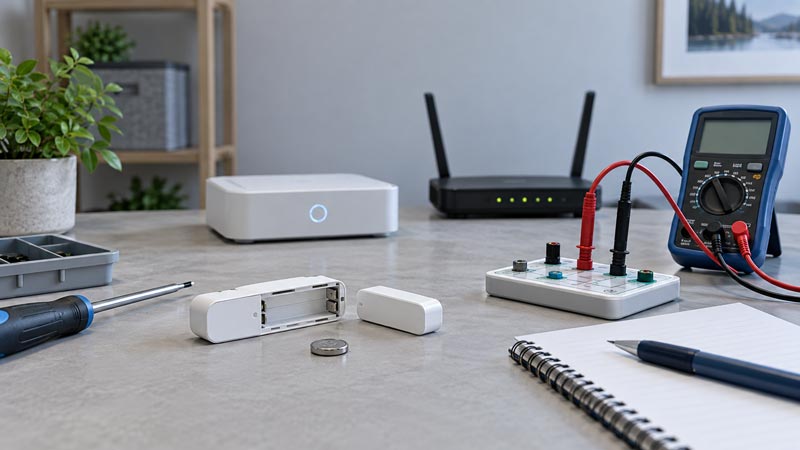
This practical course teaches participants how to troubleshoot and maintain an existing smart home system. Students learn to distinguish power, sensor, wireless, network, controller, application, and cloud-service failures; check low-voltage power with a multimeter; diagnose failed automation scenarios; verify updates and security settings; and restore operation after restarting or replacing a device. The course consists of eight 90-minute lessons and concludes with the diagnosis of an instructor-prepared fault and the development of a maintenance plan.
Goal
Locate a fault, verify recovery, and create a maintenance plan without guessing the cause.
Audience
Owners of an existing system, entry-level service personnel, and EE-15 or EE-16 graduates.
Proposed format
Eight 90-minute lessons, 12 instructional hours.
Lesson topics and hands-on tasks
- Inventory device models, software versions, locations, network, power, apps, and the reported symptom.
- Separate power, sensor, radio, network, controller, app, and cloud-service faults; build a troubleshooting decision tree.
- Check a training device's low-voltage power with a multimeter; distinguish loss of power from a connectivity issue.
- Compare operation near the controller and in the normal location; inspect battery status and available diagnostics before changing network settings.
- Investigate a device that appears online while its automation fails: trigger conditions, schedules, permissions, and output actions.
- Check updates, accounts, unique passwords, privacy options, and recovery features against manufacturer documentation.
- Practice recovery after a restart or replacement of one training device; compare before-and-after behavior using predefined tests.
- Final assignment: troubleshoot an instructor-created fault, provide a test log, state the confirmed cause or that the cause remains unknown, and prepare a maintenance plan.
Equipment
Training system with several devices, router, controller, multimeter, manufacturer manuals, and instructor-prepared faults.
Outcome
A report separating observations from hypotheses and verifying any repair with a repeat test. Changes to an owner's actual network settings or device removal require the owner's authorization and a recovery path.
Sources and technical references
- T&M Atlantic EE-5 Basics of building smart home systems and remote control of household appliances
- Connectivity Standards Alliance Matter FAQ
- Connectivity Standards Alliance Why Bridging Matters
- NIST Seven Tips to Keep Your Smart Home Safer and More Private
Back to the section
|