T&M Atlantic’s Solenoid Inductance Calculator is an online tool that lets engineers, students and electronics hobbyists compute the self-inductance of a solenoid coil simply by entering a few geometric parameters
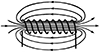
T&M Atlantic’s Solenoid Inductance Calculator is an online tool that lets engineers, students and electronics hobbyists compute the self-inductance of a solenoid coil simply by entering a few geometric parameters

12/04/2025

Solenoid inductance calculator is an easy-to-use online tool to quickly determine the self-inductance of a solenoid. A solenoid is a long, tightly wound coil.

Instead of manually deriving or looking up formulas and then calculating by hand, you simply plug in your coil dimensions and get an estimate of inductance.
Educational value: For students or designers new to magnetics/coils, this shows how geometry (turns, area, length) influences inductance.
Design aid: When designing solenoids/coils in power electronics, electromagnets or sensor circuits, you can use this tool early in the design process to check approximate values before designing detailed windings or core structures.
Free & accessible: Being an online calculator, it's available without needing proprietary software or hours of setup.

If you are designing an electromagnetic actuator (solenoid) and you want to estimate the inductance so you can size your driver circuit (switch, MOSFET, current ramp‐control) properly.

Given:

  • You wind a solenoid with N = 200 turns
  • The solenoid has a diameter D = 30 mm (0.03 m) → so cross-sectional area A=π×(0.03)2/4≈7.07×10−4 m2 A = \pi × (0.03)^2 / 4 \approx 7.07 × 10^{-4} \,m^2A=π×(0.03)2/4≈7.07×10−4m2
  • The solenoid length ℓ=50mm\ell = 50 mmℓ=50mm (0.05 m)

So you’d expect about 0.71 mH (≈711 µH) of inductance for this solenoid (assuming air-core / no high-µ core).
You would input these values into the T&M Atlantic calculator to confirm and then use that inductance to:

  • Estimate time-constant of the coil (τ = L/R) for your driver design
  • Estimate current rise / energy stored (½ L I²) for mechanical actuation
  • Confirm that your driver switch and snubber network can handle the inductive energy

Why this matters: If your driver circuit is designed for too slow a current rise (due to high inductance), the actuator might respond too slowly or the switch may get stressed. If inductance is too low, the driver might have to handle higher di/dt or energy, affecting switching losses or EMI. Using the solenoid inductance calculator helps catch such issues early.


Back to the list

Site map|Privacy policy|Terms of Use & Store Policies|How to Buy|Shipping|Payment|© T&M Atlantic, Inc., 2010-2025
PayPal VISA MasterCard American Express Discover

