| www.tmatlantic.com
Test & Soldering Equipment On-line Store |
|
D.E.V.I.C.E. (Wiki)Calculators Services |
|||||



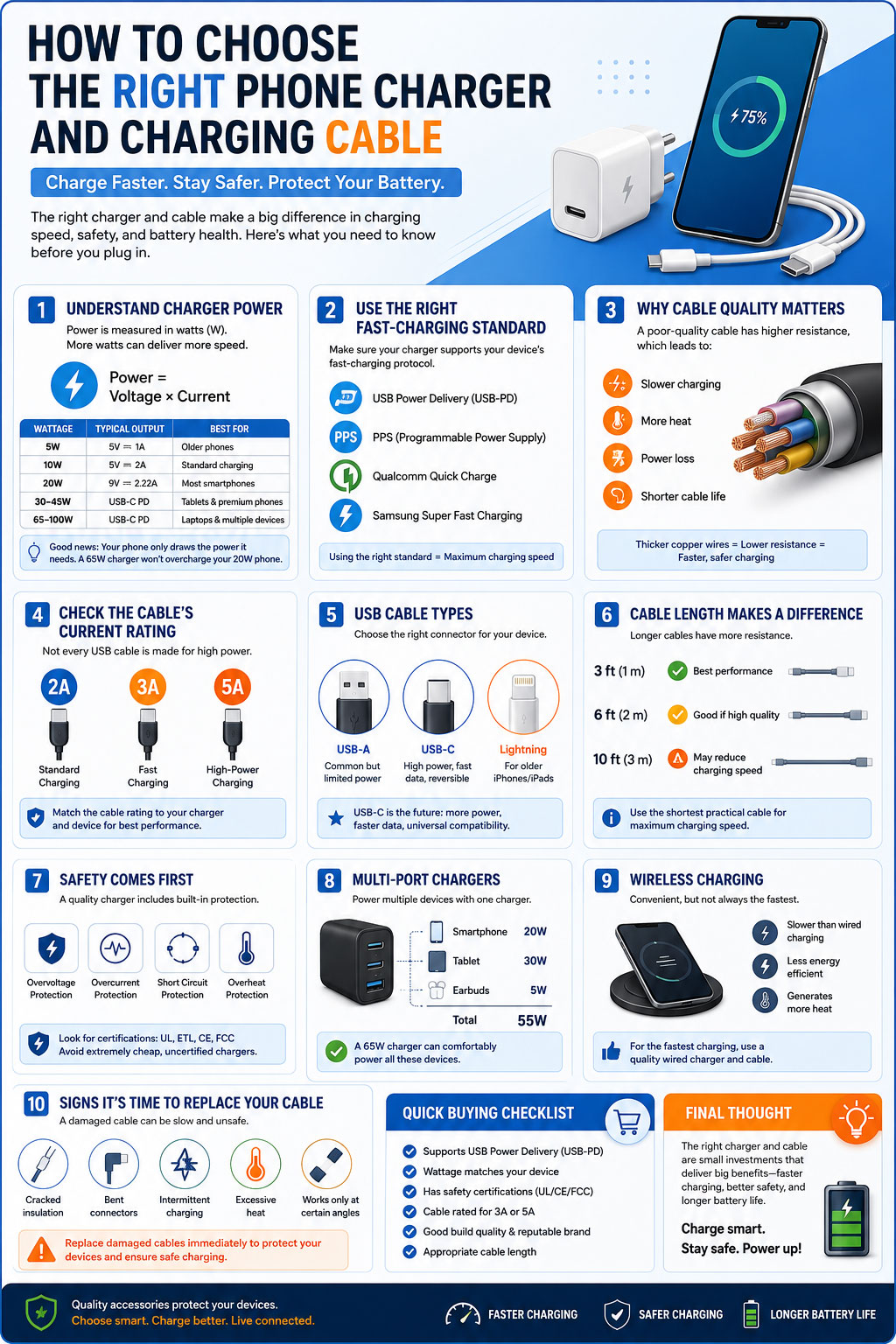
How to Choose the Right Phone Charger and Charging Cable – Quick GuideHave you ever plugged your phone into a charger only to find it's still at 20% an hour later? The problem isn't always your phone—it could be your charger, your cable, or both. With dozens of charging standards, power ratings, and cable types on the market, choosing the right accessories can be confusing. This guide explains everything you need to know to charge your phone safely and at maximum speed. Have you ever plugged your phone into a charger only to find it's still at 20% an hour later? The problem isn't always your phone—it could be your charger, your cable, or both. With dozens of charging standards, power ratings, and cable types on the market, choosing the right accessories can be confusing. This guide explains everything you need to know to charge your phone safely and at maximum speed.
Choosing the right charger is about more than convenience. A quality USB-C charger paired with a properly rated cable delivers faster charging, generates less heat, and helps ensure safe, reliable performance for years to come. Whether you're charging a smartphone, tablet, or laptop, investing in certified charging accessories is one of the simplest ways to protect your devices and get the best possible charging experience. IMPORTANT SAFETY NOTICE & DISCLAIMER WARNING
ELECTRICAL
HAZARD The information provided on this website is for educational and general diagnostic purposes only. WARNING: Performing electrical work carries inherent risks of severe injury, electrocution, or property damage. Before inspecting or troubleshooting any electrical appliance, you must read the manufacturer's instruction manual (specifically the troubleshooting section) and completely disconnect the device from the power source by unplugging it from the electrical outlet. Simply turning the device off using its power switch is NOT sufficient to eliminate electrical hazards. Under Florida law (Chapter 489, Florida Statutes), property owners are generally permitted to perform basic inspection and diagnostic tasks on their own property. However, electrical installations, alterations, or complex repairs must be performed exclusively by a licensed and certified electrical contractor. Do not attempt complex repairs yourself. |



|